Translated from the original Spanish article. Read in Spanish
News published on October 27, 2026. The situation may have changed since then.
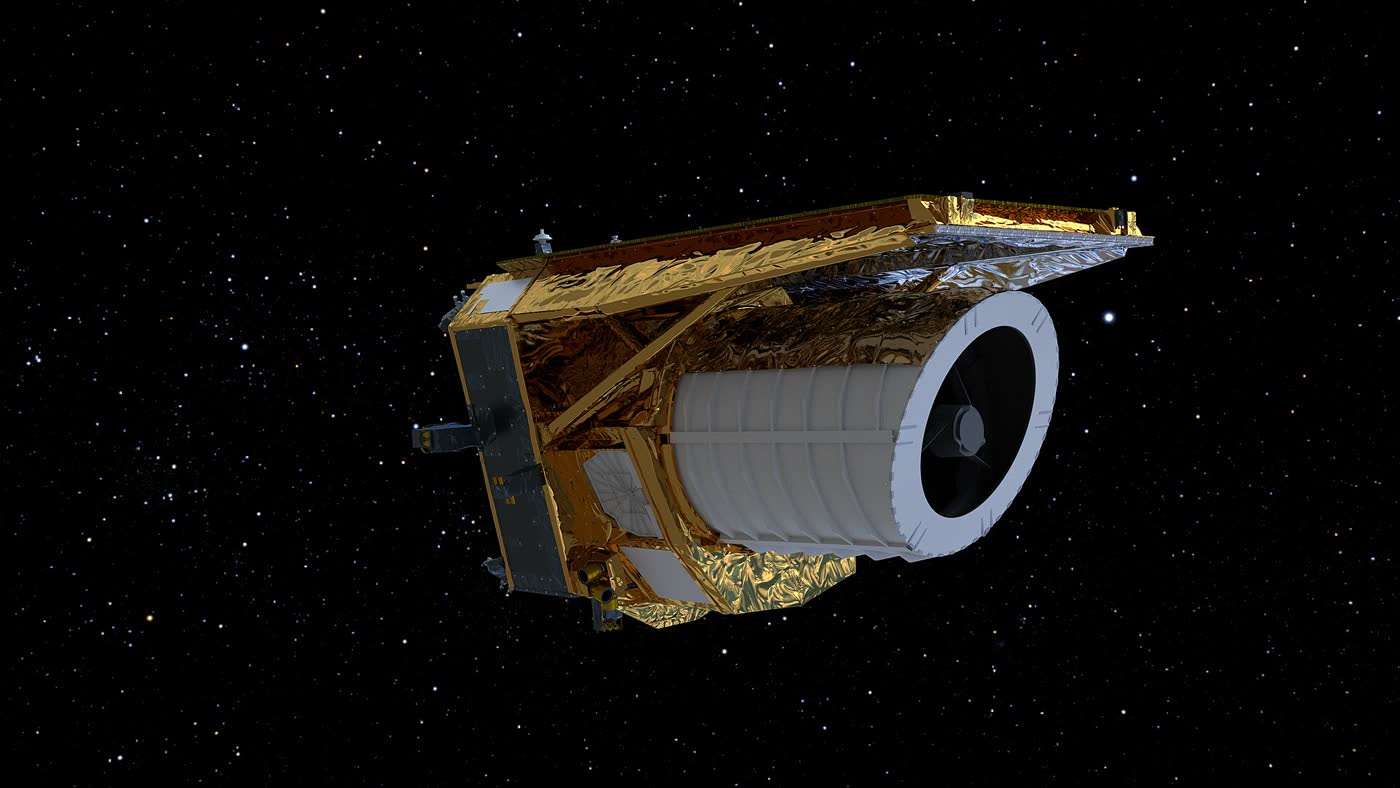
The Euclid space telescope was built to look very, very far away: galaxies billions of light-years away, to study dark matter. But this time it found something much closer: a comet nobody knew about.
The discovery
The comet showed up in images taken between September 16 and 24, 2026. It was found by Mikko Pöntinen, from the University of Helsinki, who is part of Euclid's science team devoted to solar system objects.
Pöntinen used a program he wrote himself to detect moving objects. He saw a small streak crossing several images, searched for it in other pictures and ended up finding it in five series of images.
He then compared his data with the catalogs of known comets and asteroids. It didn't match any of them. So he sent it to the Minor Planet Center, which confirmed the discovery.
Its official name is C/2026 S1 (Euclid): the first unknown comet discovered by this telescope.
Where it is
The comet is about 1.3 billion kilometers from Earth, roughly between the orbits of Jupiter and Saturn.
The European Space Agency (ESA) announced the find on October 19, 2026.
Why it matters
Euclid isn't designed to track fast-moving objects. The fact that it could detect a comet so far from the Sun shows it might be able to find new comets before they come closer.
That's useful for a future ESA mission, Comet Interceptor, which aims to visit a "newly arrived" comet from the edge of the solar system. According to specialized press, this particular comet isn't suitable for that mission, but the method is.
More stories on video
This story is web-only. Every week on our social media we tell the stories behind brands and the news.
What other great discovery do you think was made by chance?
Tell us in the comments on our social media.
Sources (in Spanish)
- Anuncio oficial: ESA, «Euclid discovers new comet» (19 de octubre de 2026) y EurekAlert.
- Detalles del descubrimiento y distancia: Phys.org y Universe Today.
- En español: Gizmodo.
Photos are from Wikimedia Commons under free licenses; the author and license are shown under each image.