Home › News › Amoeba in Yucatán
News · HealthThe "brain-eating amoeba" in Yucatán: what it is and how to protect yourself
Naegleria fowleri enters through the nose and almost nobody survives. In October it forced authorities to ban access to the water at six lakes in Mérida. This is what you need to know.

Translated from the original Spanish article. Read in Spanish
News published on October 25, 2026. The situation may have changed since then.
There's a living thing so small it can't be seen with the naked eye. It enters through the nose, travels up to the brain, and almost nobody survives.
It's called Naegleria fowleri, the "brain-eating amoeba". And in October, in Mexico, it forced authorities to ban access to the water at six lakes.
What it is
It's an amoeba, a single-celled organism that lives in warm fresh water: lakes, rivers, hot springs and poorly chlorinated pools. It loves heat: it can live in water up to 46 degrees Celsius.
It's so small that you'd need more than fifty of them in a row to reach one millimeter. It's named after Malcolm Fowler, the Australian doctor who described the first cases in 1965.
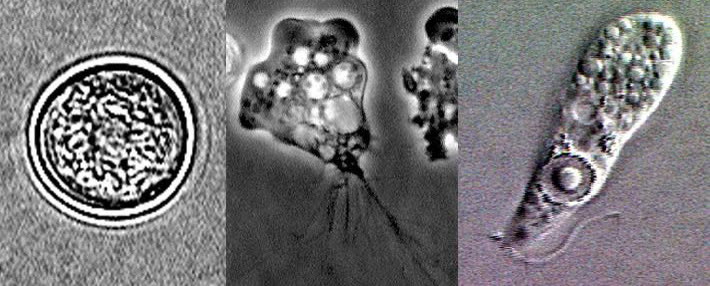
How it gets into the body
This is the most important part: you can't catch it by drinking water, or from another person.
It's only dangerous if water is forced up the nose: when diving in headfirst, swimming underwater or doing water sports. From the nose, the amoeba follows the olfactory nerve and goes straight to the brain. There it causes a very severe inflammation called primary amoebic meningoencephalitis.
Symptoms appear about five days later: severe headache, fever, nausea and vomiting. Then come a stiff neck, confusion and seizures. At first it's mistaken for ordinary meningitis, which is why it's often detected too late.
You can't catch it by drinking water or from another person: only if water is forced up your nose.
How deadly it is
In the United States, more than 160 cases have been recorded since 1962, and only four people survived: more than 97% of those infected die.
But there's hope: in 2025, in Kerala, India, there were 170 cases of brain amoeba infections and 42 deaths. Far fewer than expected, thanks to fast diagnosis and a drug called miltefosine.
What happened in Yucatán
In September, a 34-year-old water-ski instructor died of this infection in Mérida. Authorities tested nine artificial lakes in the city and found the amoeba in six.
They include those at Plaza La Isla, Cabo Norte, the Centenario Zoo, Gran Parque La Plancha and the Parque Ecológico del Poniente. The parks remain open, but going near the water is banned. In addition, 361 people who touched the water at one of those lakes were under medical monitoring until October 4.
Authorities insist that finding the amoeba doesn't mean there's an epidemic. And the tourism secretary ruled out its presence in the cenotes.
How to protect yourself
Avoid putting your head underwater in warm lakes, rivers or hot springs, especially when it's hot.
If you swim in fresh water, use a nose clip or hold your nose when jumping in. Don't stir up the mud at the bottom: that's where it hides most. And if you do nasal rinses, use boiled, distilled or sterile water, never water straight from the tap.
If you get a fever and a very bad headache after swimming in fresh water, see a doctor and tell them where you swam. Every hour counts.
This story is also a video
We explain it in a video on our channel (in Spanish). Subscribe for the story behind each headline.
Watch the video on YouTubeNow it's your turn: would you get into a lake again after learning this?
Tell us in the comments on the video.
Sources (in Spanish)
- CDC (Centros para el Control y la Prevención de Enfermedades de EE. UU.): información sobre Naegleria fowleri, cómo se produce la infección, prevención y atención clínica.
- Casos y sobrevivientes en EE. UU.: CDC y Wikipedia (Primary amoebic meningoencephalitis).
- Kerala 2025 (170 casos y 42 muertes): Ministerio de Salud de la India vía Gulf News, y Wikipedia.
- Yucatán: PorEsto (15 de octubre de 2026), The Yucatan Times, Yucatán Magazine, TeleUrban y El Congresista.
- Cenotes: declaraciones del secretario de Turismo de Yucatán, Darío Flota (vía Tiempo del Trópico).
Photos are from Wikimedia Commons under free licenses; the author and license are shown under each image.